Fiat Panda Offroad
When people hear the term “off-road,” most imagine huge, heavy off-road behemoths with a ladder-frame chassis. However, automotive history holds one small—yet all the more legendary—exception that continues to take the breath away of adventure lovers around the world to this day: the Fiat Panda 4x4.
This brilliant idea was born in the early 1980s, when the first-generation Panda forever changed the world of small cars thanks to its revolutionary design from the Italdesign studio. But the real craze began when all-wheel drive was added under the hood and to the chassis of this minimalist car. It was developed and engineered for Fiat by the renowned Austrian company Steyr-Daimler-Puch.
The 4x4 system was designed with an emphasis on absolute simplicity—it was controlled solely by a mechanical lever. Combined with the vehicle’s extremely low weight and short overhangs, this meant that the Panda could outperform much more powerful and expensive SUVs off-road. It became a faithful companion to Italian Alpine villagers, foresters, and farmers, for whom no road was impassable.
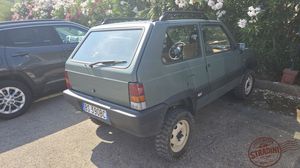
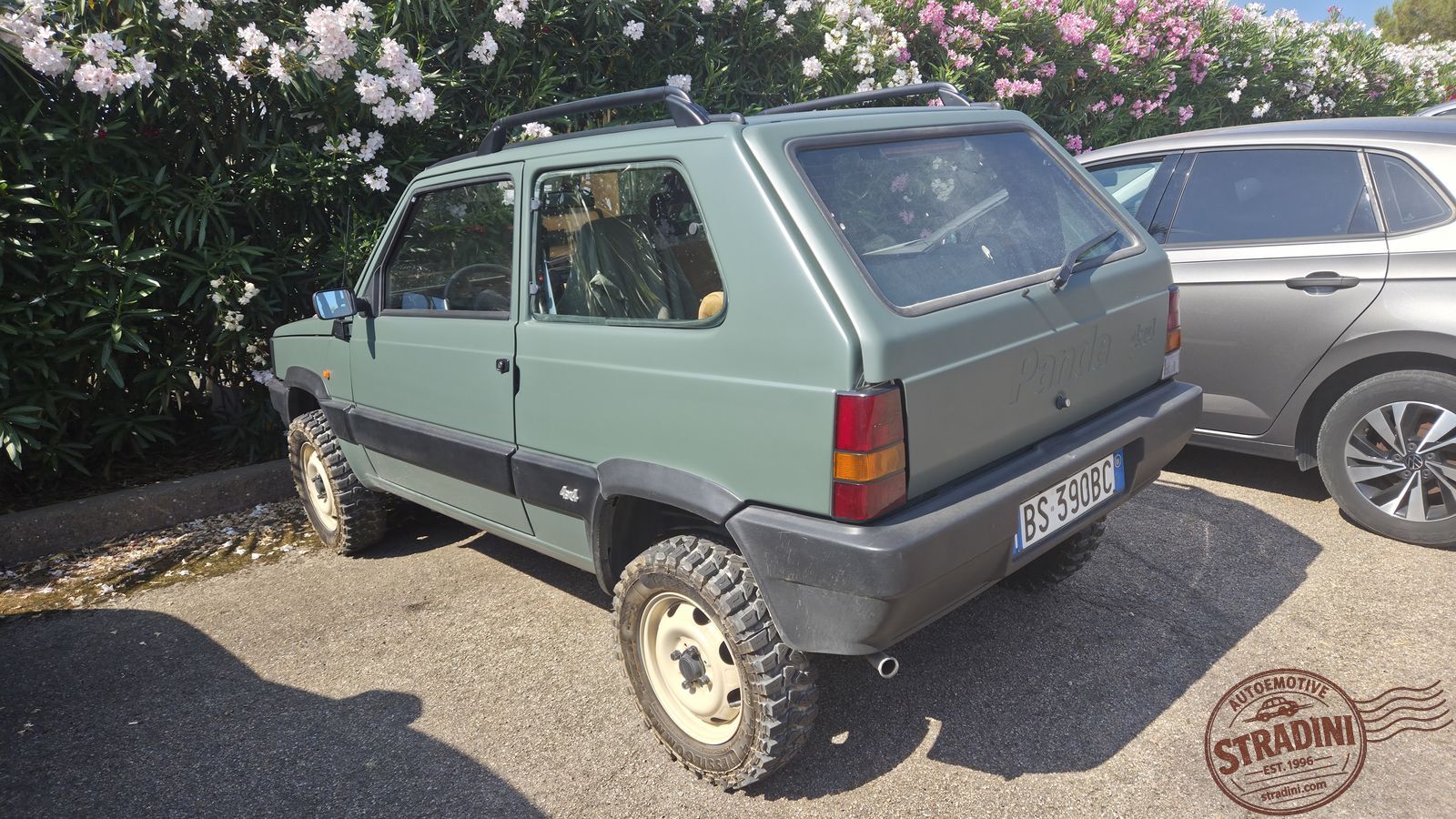
Today’s off-road modifications, as seen on this unique example in a matte military green shade, take its character even further. Robust off-road tires with deep treads, a raised suspension, and an indestructible spirit make it the perfect machine for trips into nature, perfectly embodying the STRADINI brand philosophy—combining small cars with huge character. What was once an inexpensive runabout for hardworking people has now become a sought-after collector’s icon and a stylish “youngtimer” that no one on the road will fail to notice.
The design of the first Panda from 1980 was the work of Giorgetto Giugiaro and his studio Italdesign. The designer wanted the car to be as simple as possible: flat glass, straight surfaces and seats that resembled hammocks more than traditional seats. Fiat launched the Panda 4x4 in 1983, and its popularity in the mountains is shown by the fact that, in various forms, it was built for decades – further generations followed that kept the simple, practical approach.
When buying an older Panda 4x4 it is worth paying attention above all to rust in the sills and rear wings, the condition of the lightweight bodywork and the originality of the drivetrain. The good news is that mechanical parts are very easy to get in Europe and maintenance is cheap. That is exactly why the Panda 4x4 is popular with people who want a small, simple and reliable car for the mountains, a cottage or a dirt road – without overpaying for a fashionable SUV.
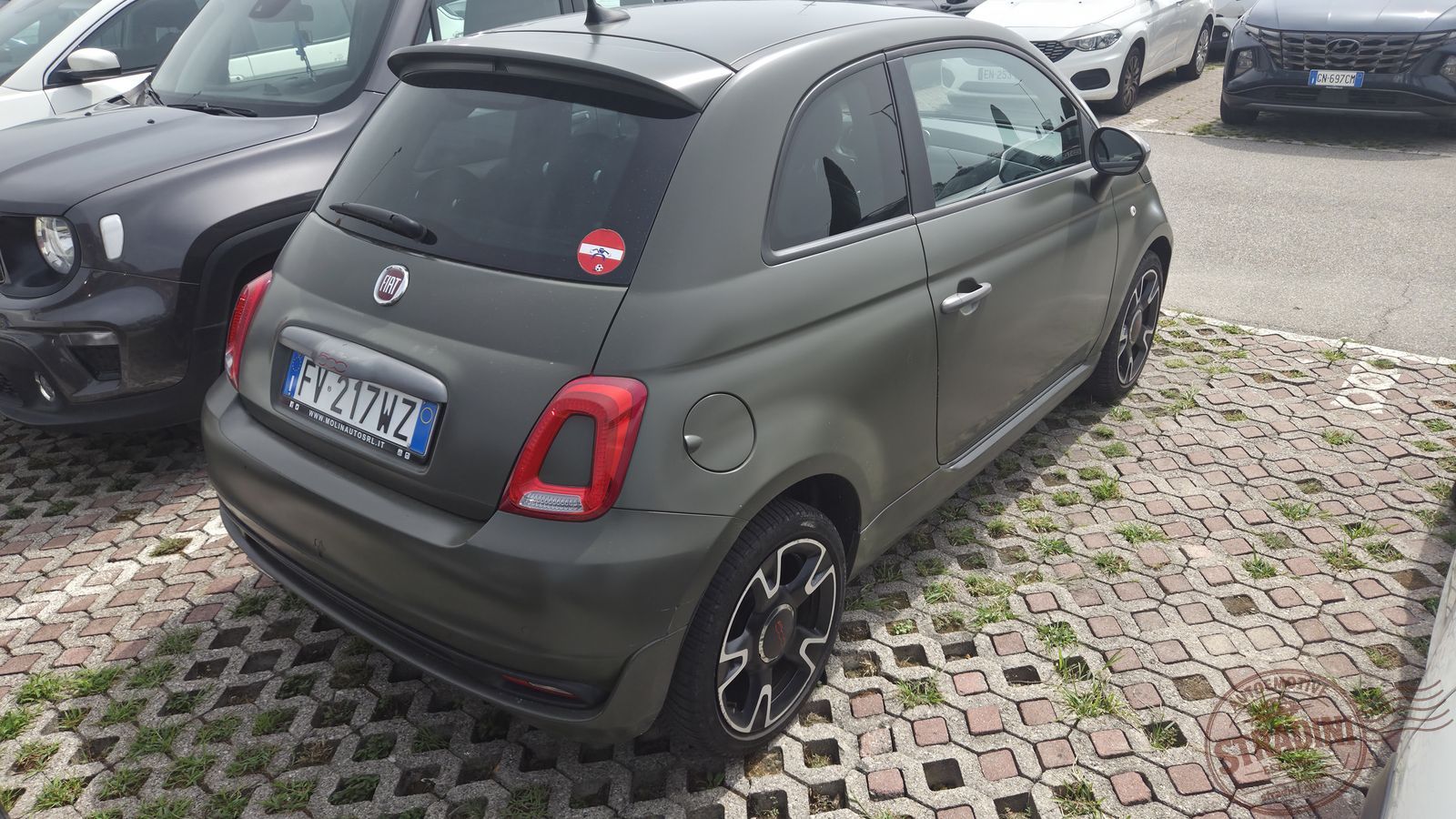
The example in our gallery shows how far this philosophy can be taken. The matt military paint, off-road tyres and raised suspension turn it into a machine that we would easily count among the smaller adventure vehicles. Two photographs do not capture everything, but looking at the car it is clear this was no pose – this owner wanted a car that really goes further than you would expect.