Fiat 500 Furgoncino
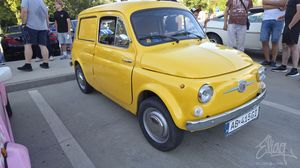
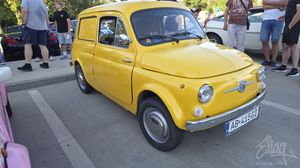
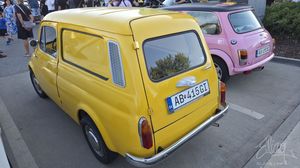
The Fiat 500 Furgoncino is a small utility van based on the legendary Fiat 500.
It was first produced in Italy in the 1960s.
The vehicle was designed primarily for urban goods delivery.
It featured a closed cargo area in the rear instead of rear seats.
It was powered by a small rear-mounted gasoline engine.
Thanks to its compact size, it was easy to park even on narrow streets.
The Fiat 500 Furgoncino was popular among tradespeople and small business owners.
It was characterized by its simple design and low operating costs.
Today, it is a sought-after classic among collectors of historic vehicles.
The Fiat 500 Furgoncino is a symbol of Italian design and practicality.
When the Fiat 500 appeared in the 1950s, its creator Dante Giacosa had in mind the simplest and most economical car for an ordinary family. It soon turned out that the little car could also do a day's work. Commercial versions grew from the same basis – vans with sheet-metal panels instead of rear windows and space for goods. This is how the picture of the small Italian city delivery vehicle was born, which we still know today as the Furgoncino.
The engine in this type is usually a two-cylinder of around five hundred cubic centimetres, air-cooled and mounted at the back. Because the drive is not at the front, space is left up front for luggage and the centre of gravity stays low. The car is light and undemanding. In the winding lanes of historic towns, where a big van cannot turn, the Furgoncino was an ideal helper. Bakers, butchers, craftsmen and postmen used it to deliver goods without having to look for a parking space. Three-wheelers such as the Piaggio Ape were competition, but Fiat offered more comfort and four wheels.
Today the Furgoncino is a rare and popular object for collectors. Surviving examples are often restored in their original colours or turned into mobile coffee bars, ice-cream stalls or promotional vehicles. The retro look attracts attention and at meetings it is always one of the most photographed cars. Looking at a Furgoncino, you realise that a small car does not have to be just fun – it can be useful too.
When buying such a car, it is worth paying attention to rust in the floor and sills, the condition of the mechanics and the originality of the parts. If you like it, let our photo gallery inspire you – the shot in which the Furgoncino stands on the street captures the Italian atmosphere better than any description.
If you have old photographs of Italian towns from the fifties or sixties at home, try looking at the background: in several shots you will find small vans that resemble ours. The Furgoncino was part of everyday street life, which is why it is a valuable witness of its time today. Technically it is a simple machine, but culturally it is a very rich piece of history.